.png)


In urgent need of assistance from our Incident Response team? Click below to email directly and get support.
Get Support
Set up regular vulnerability scans for Web Apps & Infrastructure with our innovative SecurePortal
Learn More
Your Central Platform For Security Risks
GuardNest streamlines vulnerability management into one intuitive platform.
View GuardNest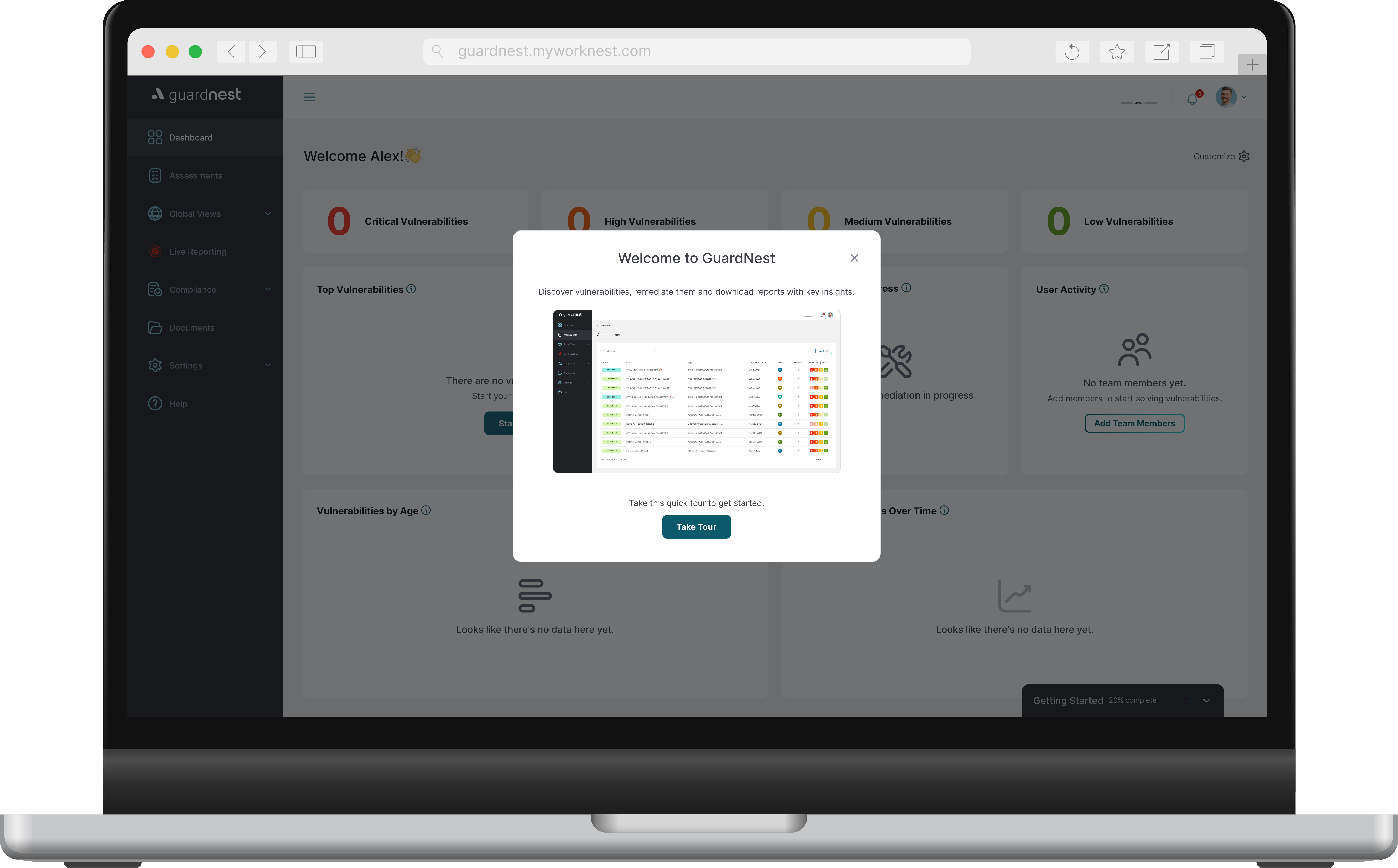

Introducing E-Learning – Accredited Security Training, Seamlessly Integrated Into GuardNest
Read
Need Our Assistance?
We now offer Incident Response Retainers helping you reduce damage from a cyber attack
Read
Your Cyber Resilience Strategy for Unknown Threats


A Cyber Resilience Strategy for Unknown Threats
Global cyber attacks increased by approximately 38% in 2025, with organisations experiencing an average of over 1,900 attacks per week. To thrive and survive in this dynamic environment, businesses must move beyond mere security and embrace a holistic strategy of cyber resilience. This strategic shift is not merely about preventing breaches; it's about building an organisation capable of anticipating, withstanding, recovering from, and evolving beyond inevitable disruptions, thereby future-proofing its operations and long-term success.
Attacks Aren't a Matter of If, But When
The digital age has fundamentally altered the operational landscape for businesses of all sizes. Increased reliance on interconnected systems, cloud services, and remote workforces has expanded the attack surface exponentially. The stark reality is that robust Cyber Security measures, while essential, are often insufficient to guard against the sheer ingenuity and persistence of cybercriminals. For many businesses, particularly smaller ones, a significant cyberattack can be catastrophic. In fact, 60% of small businesses shut down within six months of a cyberattack. This underscores that the question for any business is not if an attack will occur, but when, and more importantly, how prepared the business is to handle it. The time to shift from a reactive stance to a proactive, resilience focussed approach is now.
Understanding the Shift to Cyber Resilience
Cyber resilience builds upon traditional cyber security, adding strategic layers to ensure a business can withstand, respond to, and recover from inevitable cyber incidents. Cyber security, traditionally focussed on prevention and protection against known threats, forms a critical foundation. However, it is no longer a complete solution. Cyber resilience is a broader, more encompassing strategy that acknowledges the inevitability of threats and focuses on an organisation's ability to maintain operations during and after a cyber incident, regardless of its origin. It’s about ensuring that when the inevitable breach or disruption occurs, the business can absorb the impact, continue critical functions, and recover swiftly. This requires a strategic approach that integrates technology, process elements, and a resilient organisational culture.
Why Future-Proofing is Non-Negotiable for Modern Businesses
In a world where the technology landscape evolves daily and attackers constantly refine their tactics, a future-proof business is one that can adapt to emerging threats. Static security solutions quickly become obsolete. The increasing complexity and interconnectivity of business systems mean that a single vulnerability can have cascading effects. Furthermore, the regulatory environment is also evolving, with increasing pressure on businesses to demonstrate robust data protection and incident response capabilities. Failing to future-proof against unknown cyber dangers is not just a technical oversight; it is a fundamental business risk that can lead to significant financial losses, reputational damage, and ultimately, business failure. Investing in cyber resilience is therefore an investment in the long-term viability and competitive edge of the business.
Why "Unknowns" Are the Greatest Risk
The modern threat landscape is characterised by an escalating pace of innovation by malicious actors. Attackers are no longer limited to exploiting well-documented vulnerabilities; they are increasingly leveraging novel techniques, sophisticated tools, and emergent technologies to bypass traditional security measures. This constant evolution means that the greatest risks often stem from threats that organisations have never encountered before, making them exceptionally difficult to detect and defend against. The World Economic Forum's Global Cyber security Outlook (GCO) 2025 shows that nearly 60% of organisations report that geopolitical tensions have directly influenced their cyber security strategy, highlighting the dynamic and unpredictable nature of the threats we face.
The Limitations of Known Defenses
Many businesses operate under what can be termed a "confidence trap." They invest heavily in well-established Cyber Security tools and protocols designed to defend against known threats. While these solutions are vital, they offer a false sense of security when faced with the truly unknown. Attackers actively seek out the blind spots – the zero-day vulnerabilities, the sophisticated social engineering tactics, or the novel malware strains that evade signature-based detection. Relying solely on defenses for known attacks leaves businesses vulnerable to the unpredictable, leading to significant risks when these novel threats manifest. The core problem is that known defenses are inherently reactive to past threats, not predictive of future ones.
The Anatomy of an Unknown Threat
An "unknown threat" is, by definition, a cyberattack vector or methodology that has not been previously identified, documented, or cataloged by security researchers and defense systems. This can include:
- Zero-Day Exploits: Vulnerabilities in software or hardware that are unknown to the vendor, and thus unpatched, offering attackers a window of opportunity.
- Novel Malware Strains: New types of malicious code designed to evade existing detection mechanisms, often employing polymorphic or metamorphic techniques.
- Advanced Persistent Threats (APTs): Highly sophisticated, often state-sponsored attacks that employ custom tools and techniques to maintain long-term, stealthy access to systems.
- AI-Powered Attacks: The emerging threat of artificial intelligence being used by attackers to automate sophisticated reconnaissance, exploit discovery, and evasion tactics, creating attacks that are highly adaptive and difficult to predict.
The Business Impact of Unforeseen Cyber Disruption
The consequences of an unforeseen cyber disruption can be devastating and far-reaching for any business. Beyond the immediate financial implications, such as the cost of recovery and potential regulatory fines, there are significant operational and reputational impacts. A successful attack can cripple core business functions, leading to prolonged downtime and lost productivity. Furthermore, a significant data breach can erode customer trust, damage brand reputation, and lead to a loss of competitive advantage. In 2025, the global average cost of a data breach is estimated to exceed $5 million, highlighting the escalating financial consequences of modern cyber attacks. For businesses unprepared for novel attacks, the recovery process can be lengthy and costly, potentially jeopardizing their very existence.
A Strategic Framework for the Unforeseeable
To effectively future-proof a business against unknown cyber threats, a structured, multi-faceted approach is essential. This strategic framework focuses on building inherent adaptability and robustness into the organisation's systems, processes, and culture, enabling it to withstand and recover from disruptions that current defenses might miss. This framework moves beyond reactive patching to proactive adaptation, establishing clear goals for cyber resilience such as minimizing downtime, ensuring data integrity, and maintaining customer trust. It reimagines established security concepts and introduces new pillars designed for dynamic threat environments.
Pillar 1: Proactive Intelligence & Risk Foresight
The first step in building resilience against the unknown is to cultivate an environment that actively seeks to understand potential future threats. This involves moving beyond vulnerability scanning for known issues to embrace continuous threat intelligence gathering and robust risk foresight. Organisations must leverage advanced analytics and AI to detect anomalies in system behavior that might indicate novel attack patterns. Developing proactive threat hunting capabilities, where dedicated teams actively search for threats within the network rather than waiting for alerts, is crucial. Engaging with resources like the National Cyber Security Center for their guidance on emerging threats can provide valuable foresight. Furthermore, designing systems with inherent flexibility and modularity allows them to be more easily reconfigured or updated as new threats emerge, rather than requiring complete overhauls. This proactive stance is significantly enhanced by leveraging intelligence feeds, such as those provided by OpenText™ BrightCloud, to identify potential threats before they impact the organisation.
Pillar 2: Adaptive Defenses and Robust Protection
While prevention alone is insufficient, robust and adaptive defenses remain a cornerstone of resilience. This pillar focuses on implementing layered security solutions that can dynamically adjust to evolving threats. A Zero Trust architecture, which assumes no implicit trust and verifies every access request, is paramount. Advanced Endpoint Protection Platforms and Extended Detection and Response (XDR) tools are vital for monitoring and responding to threats at the endpoint and across the network. Implementing immutable backups and maintaining secure, isolated recovery environments ensures that even if primary systems are compromised, clean data can be restored rapidly. Strong access management, including Multi-Factor Authentication (MFA), and granular network segmentation are also critical. DNS filtering acts as a crucial proactive gatekeeper, blocking access to malicious domains and contributing significantly to these layers of protection and the overall defence in depth strategy. By deploying comprehensive endpoint protection solutions, businesses can secure their most vulnerable entry points.
Pillar 3: Rapid Response & Swift Recovery
The ability to respond quickly and effectively during an incident is a hallmark of cyber resilience. This requires pre-defined incident response plans that account for a wide range of scenarios, including those involving unknown threats. Regular tabletop exercises and simulations are essential to test these plans and ensure that teams are prepared to act decisively under pressure. Speed is critical; if an organisation can rapidly detect, contain, and neutralise a threat, the potential damage is significantly minimised. This necessitates well-trained personnel, clear communication protocols, and automated response capabilities where appropriate. Swift recovery ensures that critical business functions can be restored with minimal downtime, preserving operational continuity and stakeholder confidence.
Pillar 4: Continuous Learning & Adaptive Improvement
The cyber threat landscape is not static, and neither should a business's resilience strategy be. Continuous learning and adaptive improvement are vital to staying ahead. This involves establishing mechanisms for ongoing analysis of threats, incident post-mortems, and security posture assessments. Regularly reviewing and updating security policies, technologies, and training programs based on lessons learned and evolving threat intelligence is paramount. Benchmarking the organisation's resilience capabilities against industry standards and frameworks, such as NSCS or MITRE ATT&CK, provides valuable insights for improvement. This iterative approach ensures that the business's defenses and response capabilities evolve in parallel with the sophistication of cyber attackers. This continuous cycle of review and adaptation is a core component of a comprehensive cyber resilience strategy.
The Human Element
Technology alone cannot guarantee cyber resilience. The human element is arguably the most critical, yet often the most challenging, aspect of building a truly resilient organisation. A resilient culture empowers individuals to be an active part of the defense and recovery process.
Cyber Resilience as a Boardroom Priority
For cyber resilience to be effective, it must be recognised as a strategic imperative at the highest levels of the organisation. Leadership buy-in ensures that the necessary resources, budget, and organisational support are allocated to resilience initiatives. Cyber resilience strategy should be a regular topic of discussion in board meetings, framed not as an IT cost, but as a critical investment in business continuity and risk management. When leaders champion resilience, it signals its importance throughout the organisation, fostering a culture where security and preparedness are valued by all.
Training, Awareness, and Critical Thinking
Beyond basic cyber security awareness training, employees need to be equipped with the skills to identify and report unusual or suspicious activities, even if they don't fit a known threat pattern. Fostering critical thinking allows individuals to question suspicious requests or anomalies, acting as a vital line of defense against novel social engineering tactics. In 2025, insider risk continues to rise, with nearly half of organisations reporting increased insider-related incidents. Security training should address evolving threats such as advanced phishing and social engineering, reinforce secure data handling, and clearly outline how to report suspicious activity.Empowered employees become active participants in the resilience strategy, extending the organisation's layers of protection.
Breaking Down Silos for Integrated Resilience
Effective cyber resilience requires a collaborative approach that breaks down traditional silos between IT, security, legal, communications, and operational departments. An incident response plan is only effective if all relevant stakeholders understand their roles and responsibilities. Cross-functional training and regular communication ensure that everyone is aligned and working towards a common goal. This integrated approach allows for faster decision-making, more coordinated actions during an incident, and a more holistic understanding of the business's vulnerabilities and strengths. Ultimately, cyber resilience has evolved beyond the exclusive domain of IT and security teams—it now requires collaboration across your entire organisation.
Measuring Value and Securing the Future
Investing in cyber resilience is not merely about mitigating risk; it is a strategic investment that yields significant dividends for the business. By building a robust and adaptive defense, organisations can not only protect themselves from harm but also unlock new opportunities and secure their long-term future.
Quantifying Resilience
To demonstrate the value of cyber resilience initiatives and identify areas for improvement, establishing key performance indicators (KPIs) is essential. These metrics should go beyond traditional security metrics to encompass aspects of preparedness and recovery. Examples include:
- Mean Time to Detect (MTTD): The average time it takes to identify a cyber incident.
- Mean Time to Respond (MTTR): The average time it takes to contain and remediate an incident.
- Recovery Time Objective (RTO): The target time within which business functions must be restored after a disruption.
- Recovery Point Objective (RPO): The maximum acceptable amount of data loss measured in time.
- Success Rate of Incident Response Drills: Measuring the effectiveness of tested response plans.
- Number of Identified and Mitigated Unknown Threats: Tracking proactive efforts.
Reporting on these metrics to leadership ensures transparency and drives continuous improvement of the cyber resilience strategy.
Unlocking Competitive Advantage
A strong cyber resilience strategy can serve as a significant competitive differentiator. In an era where data breaches and cyber incidents are increasingly common, customers and partners are more aware of and concerned about the security of their data. Businesses that can demonstrably prove their resilience and ability to protect sensitive information build greater trust and loyalty. This confidence can translate into increased market share, stronger customer retention, and the ability to pursue new business opportunities that require a high level of security assurance. Moreover, a resilient infrastructure is more agile, enabling faster adoption of new technologies and market pivots without being crippled by fear of cyber disruptions.
Long-Term Business Sustainability and Growth
Ultimately, cyber resilience is about ensuring the long-term sustainability and growth of the business. The financial impact of cyberattacks can be severe, with ransomware claims alone costing over $1.18 million in 2025, a substantial increase from the previous year. With ransomware attacks rising 32% in 2025, preparedness is not optional. By building resilience, businesses reduce their exposure to these devastating events, protecting their revenue streams, assets, and reputation. This stability allows them to focus on innovation, market expansion, and strategic growth, rather than constantly reacting to crises.
Implementing Your Cyber Resilience Strategy
Adopting a comprehensive cyber resilience strategy is a journey, not a destination. It requires a structured approach that begins with an assessment of current capabilities and gradually builds towards a more robust and adaptive posture.
A Phased Approach
Begin by conducting a thorough risk assessment to understand your organisation's unique vulnerabilities and the specific threats it faces, with a particular focus on potential unknown risks. Prioritise your critical business functions and the systems that support them. Develop a clear roadmap that outlines the steps needed to enhance resilience, focusing on foundational elements first. This might involve improving incident response planning, enhancing backup and recovery procedures, or implementing multi-factor authentication across all critical systems. Subsequent phases can build upon these foundations, introducing more advanced security technologies and proactive threat intelligence capabilities. This phased approach ensures a systematic build-out of resilience.
Leveraging the Right Technologies and Expertise
Selecting the appropriate technology solutions is crucial for supporting your cyber resilience strategy. This includes investing in tools for advanced threat detection, security information and event management (SIEM), endpoint protection, and robust data backup and recovery systems. Consider solutions that offer automation capabilities for faster response and recovery. Engaging with cyber security consultants or managed security service providers can provide access to deep knowledge and advanced tools, especially for businesses that may lack in-house expertise. The most effective cyber security solutions for your organisation will support your specific business strategy—they must be scalable as you grow, regularly testable to verify effectiveness, and aligned with your overall business objectives. This also includes essential foundational security measures like DNS filtering as part of your multi-layered approach.
Continuous Review and Iteration
The cyber threat landscape is constantly evolving, so your resilience strategy must too. Implement a regular review process to assess the effectiveness of your security measures, update incident response plans, and integrate new threat intelligence. Conduct periodic penetration testing and vulnerability assessments, and importantly, test your incident response and recovery capabilities through realistic simulations. Learn from any incidents that occur, no matter how minor, and use these lessons to refine your strategy and strengthen your defenses. This continuous cycle of review, iteration, and improvement is what truly future-proofs your business against the unknown. Focusing on refining process elements based on real-world events or simulations is key to this evolution.
Conclusion
Your Call to Action: Start Building Resilience Today
The time to act is now. Delaying the implementation of a comprehensive cyber resilience strategy exposes your business to unacceptable risks. Begin by assessing your current posture, engaging your leadership, and prioritising the foundational pillars of resilience. Leverage the right technologies and expertise, empower your people, and commit to continuous improvement. By adopting a proactive, resilient approach, you can transform potential vulnerabilities into enduring strengths, future-proofing your business for the challenges and opportunities that lie ahead.
Speak with our experts and build resilience:- https://i3vvdzd6bsy.typeform.com/to/vgF2xENQ
.svg)



.webp)


