.png)


In urgent need of assistance from our Incident Response team? Click below to email directly and get support.
Get Support
Set up regular vulnerability scans for Web Apps & Infrastructure with our innovative SecurePortal
Learn More
Your Central Platform For Security Risks
GuardNest streamlines vulnerability management into one intuitive platform.
View GuardNest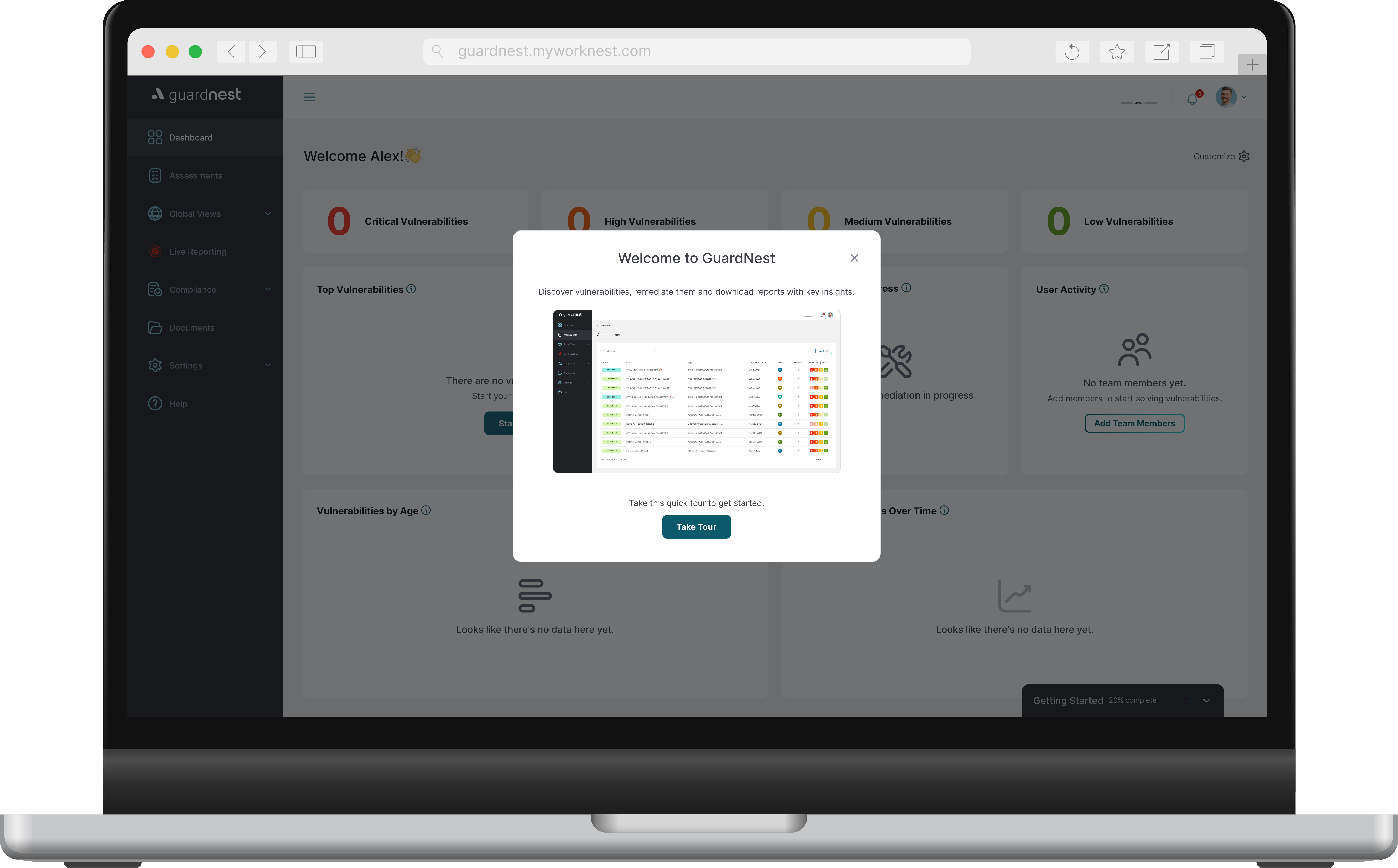

Introducing E-Learning – Accredited Security Training, Seamlessly Integrated Into GuardNest
Read
Need Our Assistance?
We now offer Incident Response Retainers helping you reduce damage from a cyber attack
Read
Why Cyber Security Budgets Fail (And How to Fix Them)


Organisations are investing heavily in cyber security, with global spending on cyber security products and services projected to reach approximately $213 billion in 2025 and expected to grow further to around $240 billion by 2026. Yet, a persistent paradox remains: despite escalating budgets, the threat landscape continues to evolve, and data breaches and cyber attacks are becoming more sophisticated and prevalent. This disconnect suggests a fundamental problem not with the amount of money spent, but with how it's allocated and measured.
If your Cyber Security Budget isn't yielding the expected returns in security and resilience, it's time to look beyond the spreadsheets and diagnose the deeper issues. This article will explore why many cyber security budgets fail to deliver true value and provide a strategic framework for making yours succeed.
Why More Money Doesn't Always Mean More Security
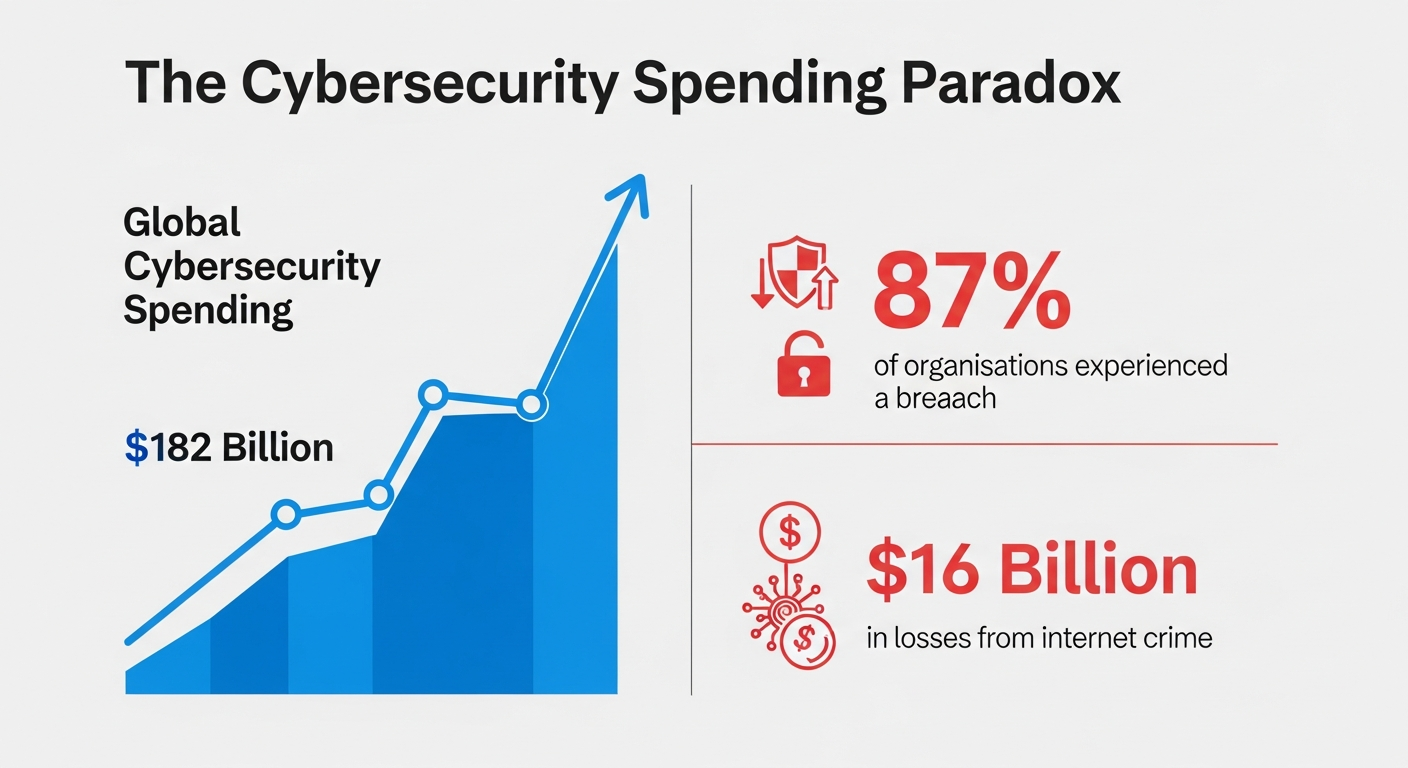
The instinct when facing increasing cyber risk is to increase spending. However, simply throwing more money at the problem often leads to a false sense of security. A 2023 study revealed that 87% of organisations experienced one or more security breaches, with over half reporting losses exceeding $1 million [Fortinet, 2024]. This stark reality, coupled with escalating losses from internet crime, which reached over $16 billion in 2024 [FBI IC3, 2025], indicates that traditional investment strategies are falling short. The challenge isn't a lack of financial commitment, but a potential misalignment of priorities, an overreliance on technology alone, and a failure to address fundamental vulnerabilities that often stem from people and processes, not just insufficient firewalls or detection tools.
Redefining "Success" in Cyber Security Spending
For years, cyber security success has been narrowly defined by metrics like the number of deployed tools, compliance adherence, or the speed of threat detection. While these are important, they fail to capture the full picture of an organisation's security posture and resilience. True success lies in minimising the impact of cyber attacks, ensuring business continuity, and enabling digital transformation safely. It means shifting the focus from merely preventing incidents to effectively managing cyber risk and ensuring swift recovery when incidents inevitably occur. The goal is not just to avoid a Data Breach, but to minimise its consequences, including significant financial losses and severe reputational damage.
Why Your Cyber Security Budget Is Failing to Deliver
Understanding why budgets aren't working is the first step towards fixing them. Several systemic issues plague cyber Security spending, leading to wasted resources and persistent vulnerabilities.
Misalignment with Business Objectives and Risk Appetite
A common ailment is the disconnect between the Cyber Security Budget and overarching business objectives and risk appetite. Security teams may focus on technical threats while the business prioritises growth, innovation, or market expansion. Without a clear understanding of how security supports these strategic goals, investments can become misdirected. For instance, a company might invest heavily in advanced threat detection while neglecting the security of its cloud infrastructure, which is crucial for its growth strategy. Furthermore, a poorly defined risk appetite means decisions are made reactively, not strategically, leading to under- or over-investment in areas that don't align with the business's actual tolerance for cyber risk.
Underinvesting in People and Processes
Technology is only one piece of the security puzzle. A significant portion of cyber attacks, particularly those involving phishing and social engineering, exploit human weaknesses. When budgets disproportionately favor technology over training, awareness programmes, and skilled personnel, organisations become inherently vulnerable. The global cyber security workforce gap has reached a record 4.8 million unfilled roles [DeepStrike, 2025], highlighting the critical shortage of talent. Investing in robust security awareness training for employees, clearly defined security protocols, and a well-drilled incident response team are just as vital as any technological defense. Neglecting these areas means even the most advanced security stack can be bypassed by a single, well-crafted email.
Cyber Security as a Strategic Business Enabler
To unlock the full potential of your Cyber Security Budget, you must shift your perspective. Cyber Security should not be viewed as a mere cost center or a compliance checkbox, but as a fundamental driver of business resilience, innovation, and growth.
Moving Beyond "Cost Center" to "Resilience Driver"
By framing cyber security as a "resilience driver," organisations can justify investments based on their ability to maintain operations, protect valuable assets, and ensure continuity, even in the face of adversity. This perspective highlights how robust security measures enable confident adoption of new technologies, like cloud services, and expansion into new markets, secure in the knowledge that cyber risk is being managed effectively. The budget then becomes an investment in business continuity and operational integrity, not just a defensive expense.
Financial Losses, Reputational Damage, and Regulatory Fines
The true justification for a comprehensive Cyber Security Budget lies in understanding the devastating "cost of inaction." A single Data Breach can result in astronomical expenses, including forensic investigations, legal fees, customer notification, credit monitoring, and regulatory fines. The average global cost of a data breach was $4.44 million in 2025, according to IBM’s Cost of a Data Breach Report, while US organisations experienced even higher average costs above $10 million. Beyond direct financial hits, the reputational damage from a breach can be irreparable, eroding customer trust and leading to long-term business decline. Regulatory penalties, such as those under GDPR or CCPA, add another layer of financial risk. Recognising these potential losses makes proactive security investments a prudent business decision.
Building an Effective Cyber security Budget
Transforming your Cyber Security Budget requires a structured, strategic approach. Here’s a framework to guide your efforts:
Step 1: Understand Your Cyber Risk and Business Context
Before allocating a single pound, conduct a thorough assessment of your organisation's unique cyber risk landscape. This involves:
- Asset Identification: Knowing exactly what critical assets (data, systems, intellectual property) you need to protect.
- Vulnerability Assessment: Regularly identifying and prioritising vulnerabilities across your entire IT infrastructure, including on-premises systems and cloud environments.
- Threat Modeling: Understanding the specific types of cyber attacks and cybercriminals most likely to target your organisation.
- Business Impact Analysis: Quantifying the potential impact of a successful attack on your business operations, finances, and reputation. This provides the crucial context for risk-based decision-making.
Step 2: Align Security Spending with Business Goals and Objectives
Your Cyber Security Budget should directly support and enable your organisation's strategic goals.
- Strategic Alignment: For example, if your business goal is digital transformation, your security budget should prioritise securing cloud migrations and enabling secure remote access. If you are entering new markets, focus on compliance and data protection relevant to those regions.
- Risk Appetite Integration: Ensure your security investments reflect your defined risk appetite. If the organisation has a low tolerance for data breaches, the budget should prioritise robust preventative measures and rapid incident response capabilities.
Step 3: A Balanced Approach to People, Process, and Technology
A truly effective budget balances investment across three critical pillars:
- Technology: Invest in solutions that integrate well and provide comprehensive coverage. This includes modern firewalls, robust endpoint detection and response (EDR), secure cloud security posture management, and tools for threat detection and automation. Avoid acquiring a fragmented array of point solutions; opt for integrated platforms where possible.
- People: Allocate resources for continuous training and skill development. This includes general employee awareness programs against phishing and targeted training for IT and security staff. Addressing the global cyber security workforce gap means investing in your existing talent and fostering a security-conscious culture.
- Processes: Develop and mature critical security processes. This includes a well-defined and regularly tested incident response plan, a proactive vulnerability management program, and robust recovery strategies. Automation should be leveraged to streamline repetitive tasks and enhance efficiency in threat detection and response.
Step 4: Measure What Matters
Shift your measurement from vanity metrics to outcome-based KPIs that demonstrate business value.
- Reduced Incident Impact: Track the reduction in the severity and duration of cyber attacks and data breaches.
- Mean Time to Detect (MTTD) & Mean Time to Respond (MTTR): Measure how quickly you can identify and neutralise threats.
- Reduced Vulnerability Exposure: Track the decrease in critical vulnerabilities over time.
- Business Resilience Score: Develop a metric that reflects your organisation's ability to withstand and recover from disruptions.
- Cost of Inaction Reduction: Estimate the potential financial losses averted due to proactive security measures.
Step 5: Continuous Review & Adaptation
The threat landscape is constantly changing, and so should your Cyber Security Budget.
- Regular Audits: Conduct periodic reviews of your budget allocation and its effectiveness against evolving threats and business objectives.
- Adaptability: Build flexibility into your budget to respond to emerging threats and new technologies.
Practical Strategies for Making Your Budget Succeed
Embracing Automation and AI for Enhanced Efficiency
Invest in automation and Artificial Intelligence (AI) to augment your security team's capabilities. AI-powered tools can accelerate threat detection, analyse vast amounts of data for anomalies, and automate repetitive tasks in incident response and vulnerability management. This is crucial given the growing cyber security workforce gap, which has hit a record 4.8 million unfilled roles [DeepStrike, 2025]. Automation allows your team to focus on higher-value strategic tasks rather than being overwhelmed by alerts.
Strengthening the Human Firewall
Prioritise and significantly invest in employee training. Beyond basic compliance, focus on interactive, scenario-based training that addresses evolving threats like advanced phishing tactics. Foster a culture where employees feel empowered to report suspicious activity without fear of reprisal. A well-trained workforce is one of the most effective defenses against cybercriminals and significantly reduces the risk of costly data breaches.
Smart Sourcing & Third-Party Expertise
Don't try to do it all in-house. Leverage managed security service providers (MSSPs) or specialised consultants for functions where in-house expertise is lacking or cost-prohibitive. This could include penetration testing, threat hunting, or sophisticated cloud security management. Additionally, consider cyber Insurance as part of your risk mitigation strategy. It doesn't replace security controls but can significantly offset the financial impact of data breaches and other incidents.
Conclusion: From Numbers to Strategic Outcomes
It's time to stop treating your Cyber Security Budget as just another line item and start optimising it for strategic impact. Begin by assessing where your current spending falls short. Conduct a comprehensive risk assessment, engage your business stakeholders to ensure alignment, and re-evaluate your investments in people, processes, and technology. Implement a clear measurement framework that focuses on business outcomes. By adopting this strategic, proactive, and business-aligned approach, you can transform your Cyber security Budget from an invisible drain into a powerful engine for resilience and long-term success.
.svg)



.webp)


