.png)


In urgent need of assistance from our Incident Response team? Click below to email directly and get support.
Get Support
Set up regular vulnerability scans for Web Apps & Infrastructure with our innovative SecurePortal
Learn More
Your Central Platform For Security Risks
GuardNest streamlines vulnerability management into one intuitive platform.
View GuardNest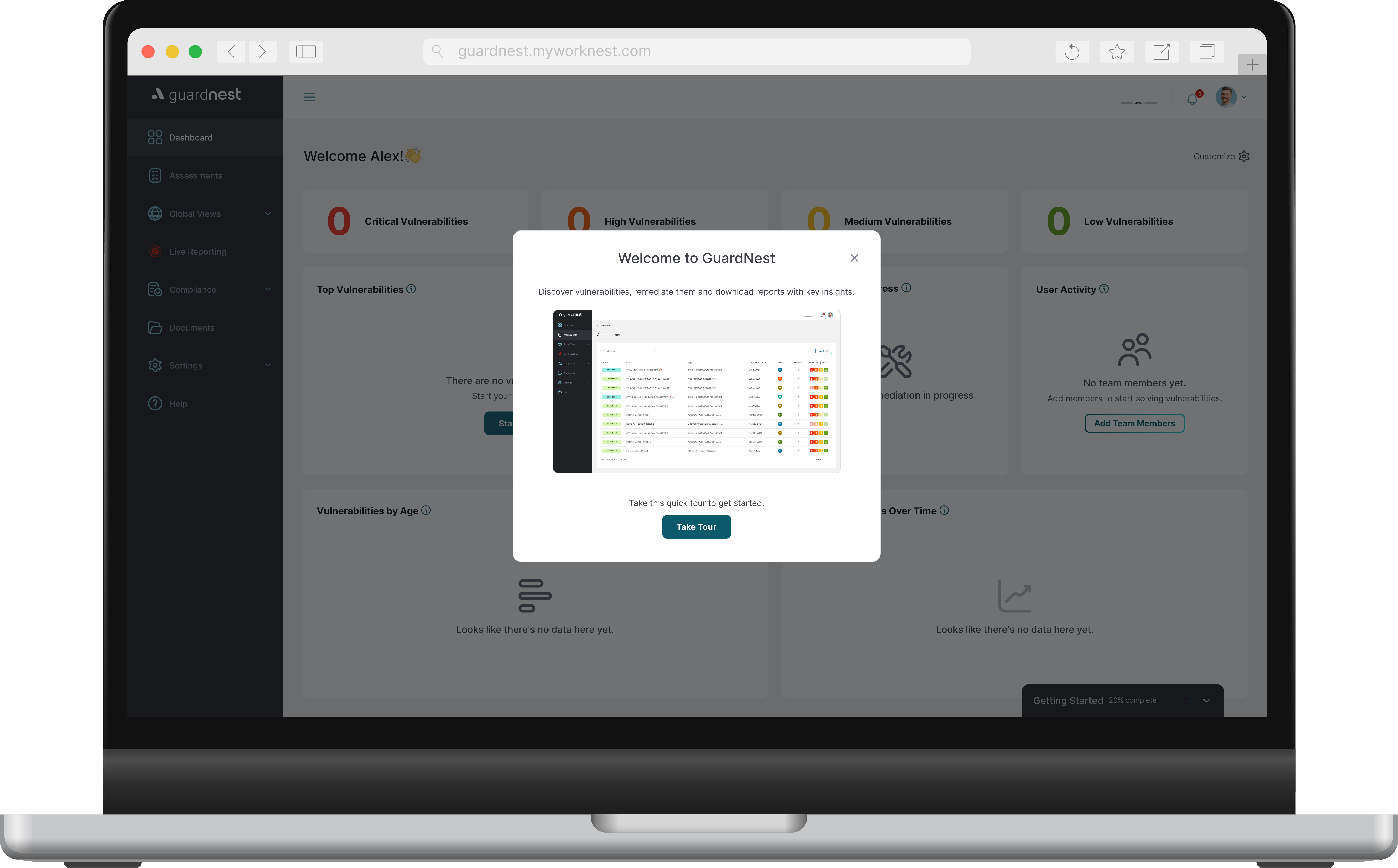

Introducing E-Learning – Accredited Security Training, Seamlessly Integrated Into GuardNest
Read
Need Our Assistance?
We now offer Incident Response Retainers helping you reduce damage from a cyber attack
Read
Cyber Resilience Training For Your Internal Team


While technology forms the first line of defence, its effectiveness is significantly amplified by the human element. Empowering your employees with essential cyber resilience skills is no longer an option; it is a critical imperative for safeguarding your organisation, its data and its future.
Navigating Modern Challenges
The spectrum of cyber threats is broader and more sophisticated than ever before. Organisations face constant attacks, ranging from widespread phishing campaigns designed to steal credentials to highly targeted advanced persistent threats (APTs) aimed at long-term system compromise. Ransomware attacks can cripple operations, demanding substantial payouts while disrupting critical business continuity.
These attacks are not random; they are meticulously planned and executed, often exploiting human vulnerabilities as the easiest point of entry. The increasing reliance on cloud services, the proliferation of IoT devices and the widespread adoption of remote working have further expanded the attack surface, creating new opportunities for malicious actors.
The Human Element: From Weak Link to Strongest Defence
In recent years, employees have often been viewed as the weakest link in cyber security. Human error, whether clicking on a malicious link or using weak passwords, accounts for a significant proportion of successful breaches.
However, this perspective is shifting. With the right security training, employees can transform from a vulnerability into the strongest element of an organisation’s defence. By equipping individuals with the knowledge to recognise and report threats, understand social engineering tactics and practise safe digital habits, organisations build a “human firewall” that strengthens technical controls. This proactive approach to employee empowerment is fundamental to achieving genuine cyber resilience.
Defining Cyber Resilience: Beyond Prevention
Cyber resilience goes beyond preventing attacks; it is about an organisation’s ability to prepare for, detect, respond to and recover from cyber incidents. It includes maintaining operations during an attack and adapting defences in response to emerging threats.
While cyber security focuses on protecting systems and data from unauthorised access, cyber resilience is a broader strategic objective. It acknowledges that breaches may occur and emphasises building the capacity to withstand, adapt to and recover from them with minimal disruption. This requires not only technical preparedness, but also robust incident response plans, clear communication protocols and well-trained personnel ready to act decisively.
Building Your Organisational “Human Firewall”
Empowering every employee with foundational cyber security knowledge is essential. These skills form the basis of an organisation’s collective defence, turning individual awareness into a unified security posture.
Mastering Social Engineering Defence
Social engineering, particularly phishing, remains one of the most effective attack methods. Employees must be trained to recognise warning signs, such as urgency, fear or unusual requests.
This includes understanding techniques such as:
- Spear phishing (highly targeted emails)
- Whaling (targeting senior leaders)
- Smishing (SMS phishing)
Training should encourage critical thinking, healthy scepticism towards unsolicited communications, verification of sender identities and awareness that legitimate organisations rarely request sensitive information via email or text. Prompt reporting of suspicious activity allows security teams to act before damage occurs.
Strengthening Access: Strong Passwords and Multi-Factor Authentication
Compromised credentials remain a primary gateway for cyber attacks. Employees should understand the importance of strong, unique passwords that are long, complex and not easily guessed.
Multi-factor authentication (MFA) is essential. By combining something a user knows (a password) with something they have (a code or token) or something they are (biometrics), MFA significantly reduces the risk of unauthorised access — even if passwords are exposed.
Secure Data Handling and Information Protection
Protecting sensitive data is everyone’s responsibility. Employees should understand data classification policies and how to identify confidential or restricted information.
Best practices include:
- Secure file sharing
- Avoiding unsecured networks for sensitive data
- Complying with data protection regulations such as GDPR
- Proper disposal of digital and physical data
Awareness of the risks associated with mishandling data helps prevent accidental disclosure or data exfiltration.
Safe Computing and Device Security
Every interaction with a digital device carries potential risk. Employees should develop safe computing habits, including:
- Avoiding suspicious websites and downloads
- Keeping software and operating systems updated
- Using trusted sources for applications
- Securing devices with strong screen locks
For organisations that allow Bring Your Own Device (BYOD), clear policies and guidance on securing personal devices and avoiding public Wi-Fi for sensitive work are critical.
Elevating Preparedness with Advanced Drills
Hands-On Cyber Drills and Scenario Training
Practical experience reinforces theoretical knowledge. Phishing simulations and tabletop exercises allow employees to practise identifying and responding to threats in realistic scenarios.
These exercises help:
- Test incident response plans
- Clarify roles and responsibilities
- Build confidence under pressure
Active learning significantly strengthens organisational readiness.
Linking Security to Business Continuity
Cyber resilience training directly supports business continuity and disaster recovery. Well-trained employees can prevent minor incidents from escalating into major operational disruptions.
Understanding how individual actions contribute to organisational resilience reinforces the importance of secure behaviour across all roles.
Tailored Training for Key Stakeholders
Cyber resilience is not one-size-fits-all. Training should reflect role-specific risks and responsibilities.
Advanced Skills for IT and Digital Teams
IT and cyber security professionals require deeper technical training, including:
- Threat detection and analysis
- Incident response
- Digital forensics
- Secure system configuration
- Vulnerability management
Continuous professional development ensures these teams remain prepared for evolving threats.
Championing a Security Culture Across the Organisation
True cyber resilience requires a strong security culture. This means embedding awareness into daily operations, maintaining open communication about risks and recognising secure behaviours.
When cyber security becomes a shared responsibility, vigilance and proactive defence become part of the organisation’s DNA.
Implementing Your Cyber Resilience Programme
Designing Effective Training
Successful programmes are engaging, relevant and tailored. They should include interactive learning, real-world examples and regular updates reflecting current threats.
Training must be continuous, not a one-off exercise. Refresher sessions and updates ensure knowledge remains current and practical.
Leveraging Technology and Frameworks
Learning management systems can deliver and track training. Simulated environments provide practical testing opportunities.
Adopting recognised frameworks such as NCSC guidance or ISO 27001 offers a structured approach to building and maintaining resilience, ensuring alignment with industry standards and regulatory requirements including GDPR.
Measuring Impact and Evolving
Effectiveness should be measured through:
- Phishing simulation results
- Reporting rates and response times
- Reduction in incidents or severity
- Post-training assessments
Cyber resilience must evolve alongside the threat landscape. Regular reviews, incident analysis and employee feedback ensure continuous improvement.
Conclusion
Cyber security is not just a technology issue; it is a people issue. When employees are equipped with the right knowledge and confidence, they move from being a potential risk to becoming your strongest defence.
Building cyber resilience means creating a culture where everyone understands their role, can recognise threats and feels empowered to act. In a world where attacks are inevitable, organisations that invest in their people are best positioned to adapt, recover and continue moving forward.
Frequently Asked Questions (FAQs)
1. What is Cyber Resilience?
It’s your organisation’s ability to prepare for, respond to and recover from cyber attacks.
2. Why Does Cyber Resilience Matter?
Because attacks are inevitable. Being resilient means you can keep operating and reduce damage.
3. Why are Employees Important in Cyber Resilience?
Many attacks target people. Trained employees can spot threats and stop them early.
4. What Should Employees be Trained on?
Phishing awareness, strong passwords and MFA, safe data handling, and reporting suspicious activity.
5. How Can we Strengthen Cyber Resilience?
Provide regular training, run realistic simulations, support secure behaviours and continuously improve your approach.
.svg)



.webp)


